
It was a mild autumn morning as I settled in to my seat to watch my son play for his football team at Harborough Town Football Club. Sat in the back row of the clubs small stand, I watched on as the boys played to their phenomenal standards, unaware I was about to be in the presence of another kind of phenomenon.
At exactly 12:51 on Sunday 15th October 2023, my viewing of the game was disturbed by a parent of one of the other children, as he had seen something unusual in the sky. The parent knew I had an interest in Unidentified Anomalous Phenomena (UAP) and clearly feeling a little awkward even highlighting it, he pointed out an unusual object overhead, flashing at irregular intervals.
As I looked up above the roof of the stand I could see a reflective object, flashing or reflecting sunlight and it appeared to be moving very slowly in the direction of the light breeze blowing that day. The shape of the object was difficult to determine, one moment it looked spherical the next it appeared misshapen and it almost seemed to be meandering instead of holding a steady course. Judging the altitude of objects is difficult with clear blue skies but I perceived it to be under 3000ft and the size of a large balloon.
My initial thoughts were that the object was likely a metallic balloon, one that was rotating and catching the sun whilst drifting along with the upper winds. I did feel it looked unusual and thought I might get a better look at it on video, so I briefly recorded it on my Samsung S21+ using the rear facing camera at 60 frames per second (FPS). Realising I was missing the match filming what was probably just a balloon, I put my phone away after just 49 seconds of recording making occasional glances at the object as it became more distant on the horizon.
No more than five minutes later I looked up to the part of the sky where I expected the object to be given it’s predictable course and speed but nothing was there. I scanned the sky looking all around and could not see it anywhere, but I did see another almost identical looking object upwind of my position, except this one was flashing green.
My logical thoughts rationalised this as maybe being another balloon with a different material causing the suns light to reflect as green and I called over to James, another parent and friend watching.
“Balloon” he replied in a quizzical tone. I decided against recording this one, something I would later regret.
After the game I returned home and downloaded the footage to my computer expecting to zoom in and see a kids balloon. Unfortunately I couldn’t make out the object any better on my video, but something whizzing past it caught my eye right at the very start of the video.
I slowed the footage down to get a better look and then I noticed two other objects (or possibly the same one making additional passes). My first thought was they are probably flying insects and one of them even looked like a bird. It was only when I looked very carefully could I see these objects passed behind distant reference points, specifically floodlights and roadside trees that would exclude them being birds or insects because of the distance they were filmed at.
The great thing about this filming location is that it has so many fixed reference points on the horizon. On the opposite side of the pitch from me, you had the floodlights and then beyond the football pitch enclosure you have open rugby fields with more floodlights and rugby posts. Then beyond those playing fields you have a road with trees on the nearest side and buildings accommodating small businesses on the other side.
This was great I thought, because I knew if I could prove the objects pass behind reference points then I could calculate a minimum estimated speed using an assumption they were passing immediately behind the reference points. It is quite possible the objects were further beyond those reference points which would make their speeds even more phenomenal.
With little video editing skills I posted the early observations in a short video to my personal X account and then forgot all about it for a while. In the meantime I created this website and concluded a couple of other writing projects. I knew I wanted to write about this day as my next article and when I picked it up again, this time taking more time to review the footage, I began to find a lot more, so much so that I really can’t offer any explanation for it.
What I discovered, I am about to present in this article and I make no apologies for it being lengthy and technical. This is deliberate, because I want the reader to be able to work through the evidence themselves and test the logic and calculations applied, much in the way a scientific paper can be peer reviewed.
With so many suspected UAP appearing within 49 seconds, I had to create a system to differentiate between them all. I have simply numbered the 8 UAP found as 1 to 8, There were additional objects observed that have been excluded from this report, but may well also be anomalous.
For time references I use frames, based on the 60FPS, so 01:30 frames would be 1.5 seconds. This helps anyone else reviewing the original video to be able to locate the objects without spending the extraordinary amount of time I needed to find them.
In the various videos posted to X, I have cropped the original video to remove the match taking place on the pitch and also the stand roofing above me, however I have retained the full horizontal field of view (FOV) as this is important to establish estimated speeds through time over distance calculations.
So lets take a look at each UAP, in the order of the time they appear within the 49 seconds of footage. To start off you can observe all the anomalous objects in this short video edit.
We will start with the object triggering curious observation from those on the ground, UAP 1.
UAP 1
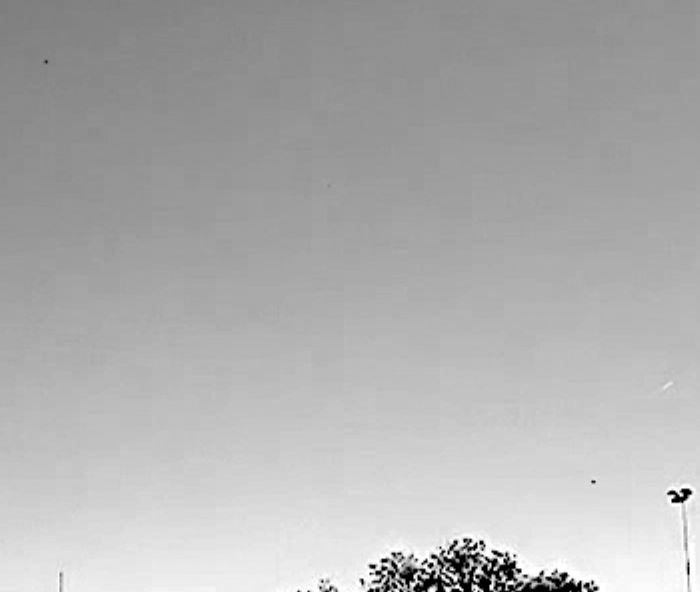
UAP 1 is the only object remaining in the cameras field of view for the full video, except for the first couple of seconds whilst I was positioning the camera towards the sky. As a suspected balloon I expected any reflections to be at regular intervals but while they started that way, it didn’t last. I noted the object flashing at 2.1, 3.5, 5.4, 7.7 and 10.1 seconds before taking a relatively long pause and flashing again at 19 seconds. These are occasions where UAP 1 fully lights up like in the image below, there are some other occasions where it appears to light on one side only.
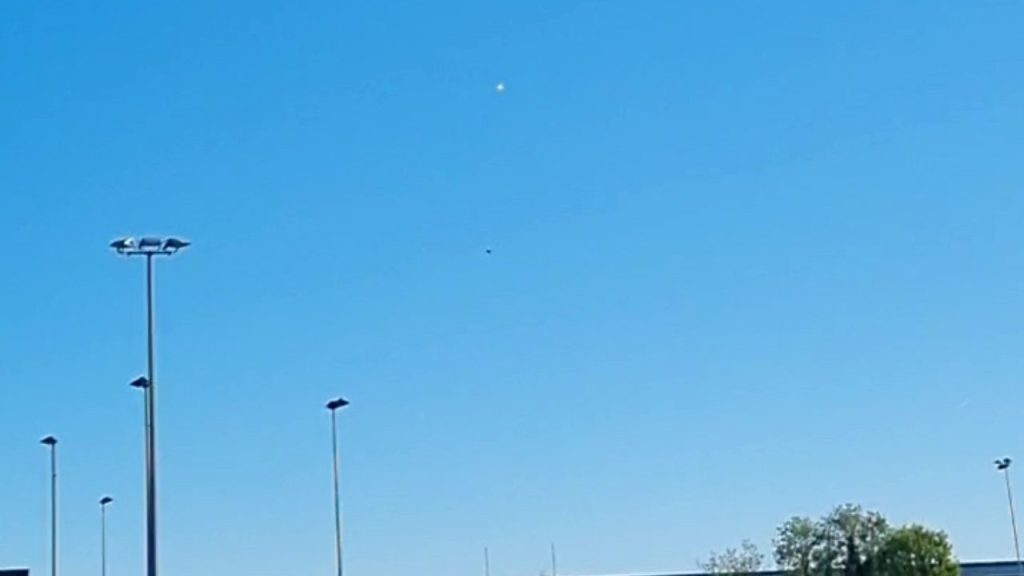
While I was filming, I was only ever aware of UAP 1 and I am trying to keep it central to the cameras field of view, it is therefore not surprising a lot of the other UAP activity happens around it, yet anecdotally I feel there is a relationship and a pattern of interaction between UAP 1 and the others. That is something that requires substantial research and analysis to check for correlations between event timings, flight paths and positioning around UAP 1 – perhaps a follow-up for this article.
One thing that is obvious over the entire video, is how UAP 1 moves into the distance away from the camera. I was able to measure the distance between the floodlight and UAP 1 at the start and end of the video, clearly highlighting it had moved position.
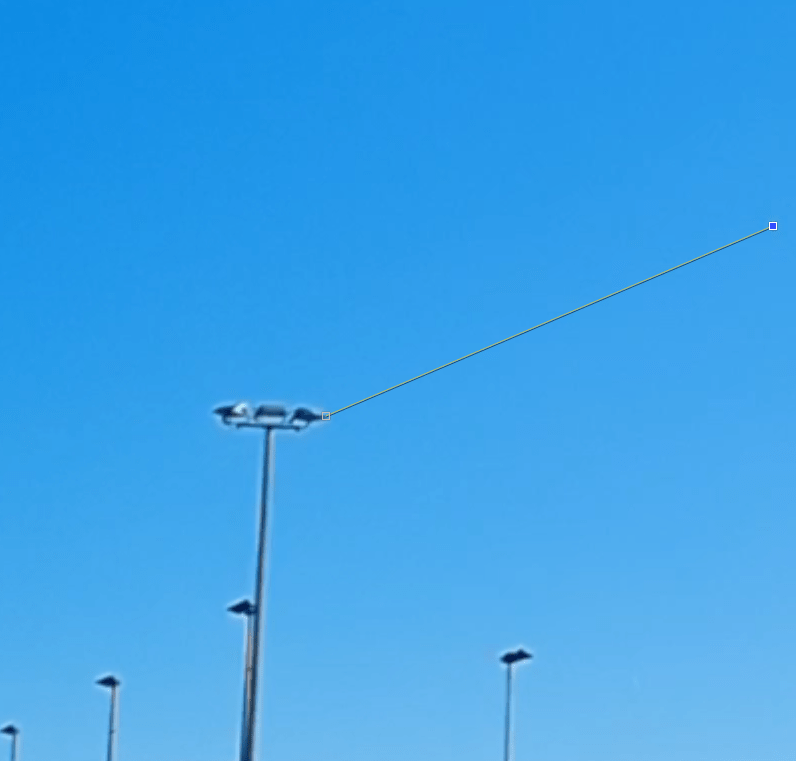
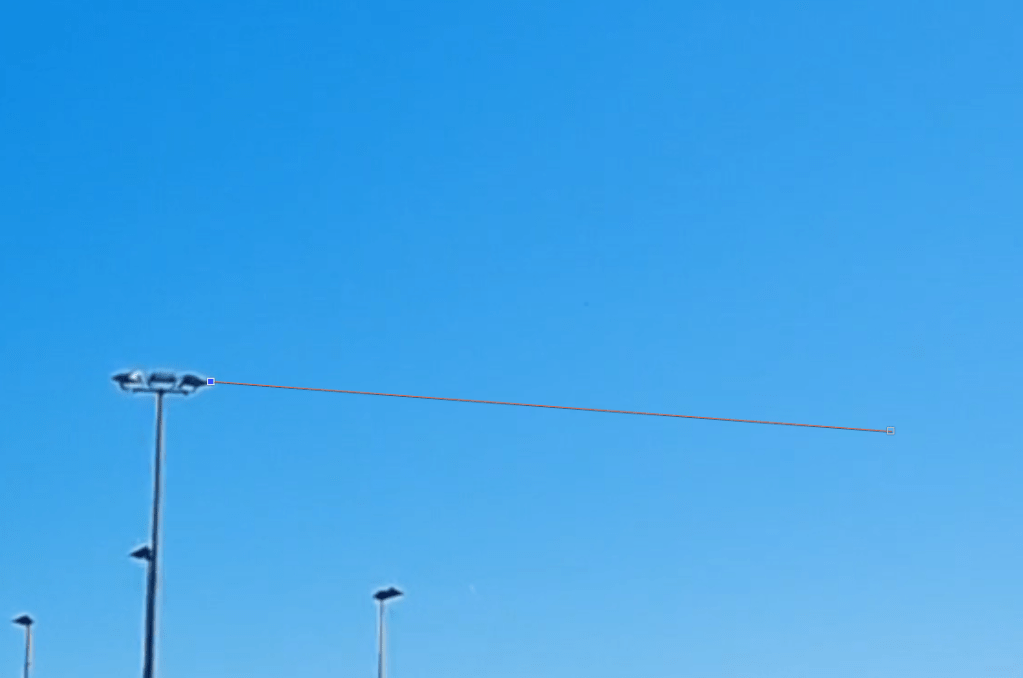
Moving at great speeds around UAP 1 were seven other anomalous objects, the first one to be observed on video is UAP 2.
UAP 2
UAP 2 is the largest object in the entire video clip and is therefore the one most easily seen as it is here approaching the floodlight with UAP 1, emitting light in the top right of the image.
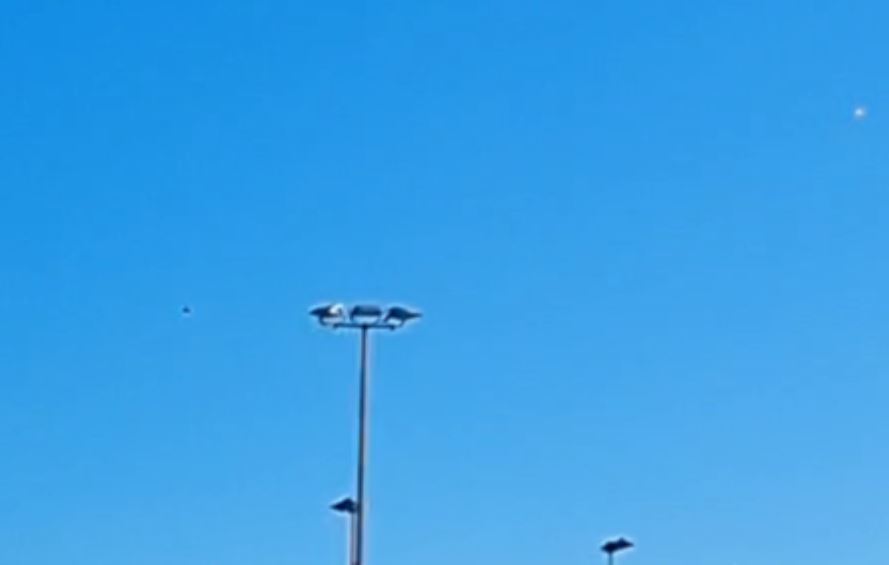
Even with sharpening and filtering to the red colour channel (the best one for seeing these objects clearly), UAP 2 just looks like a blob and in each frame it changes shape slightly. In a couple of frames it even does look like a flying insect with some protrusions that could be interpreted as wings.
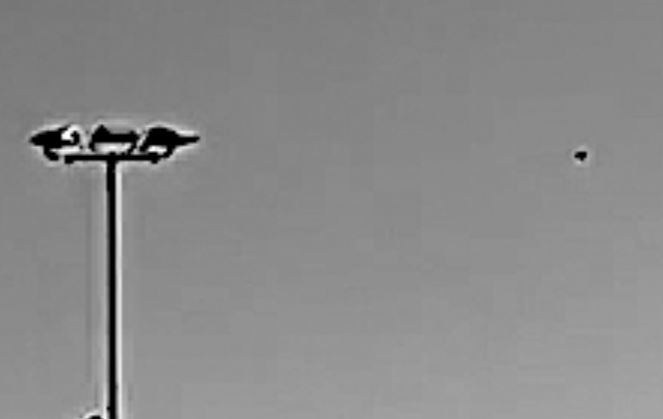
UAP 2 is not a flying insect, as I discovered when I changed colour settings to make UAP 2 appear illuminous white and the head of the floodlights dark. On frame 02:06, the object, UAP 2 enters view from the left and then passes behind the head of the floodlight with no change to the front of the headlight observed on frame 02:12.
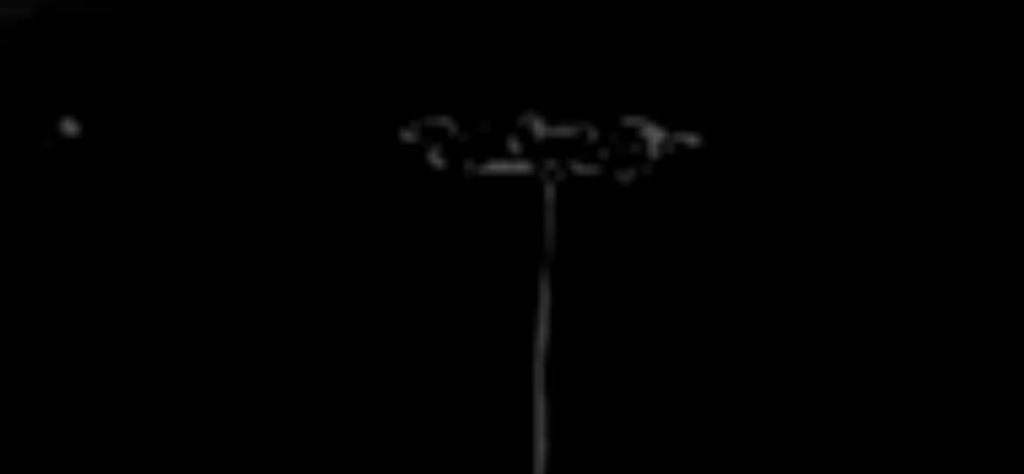
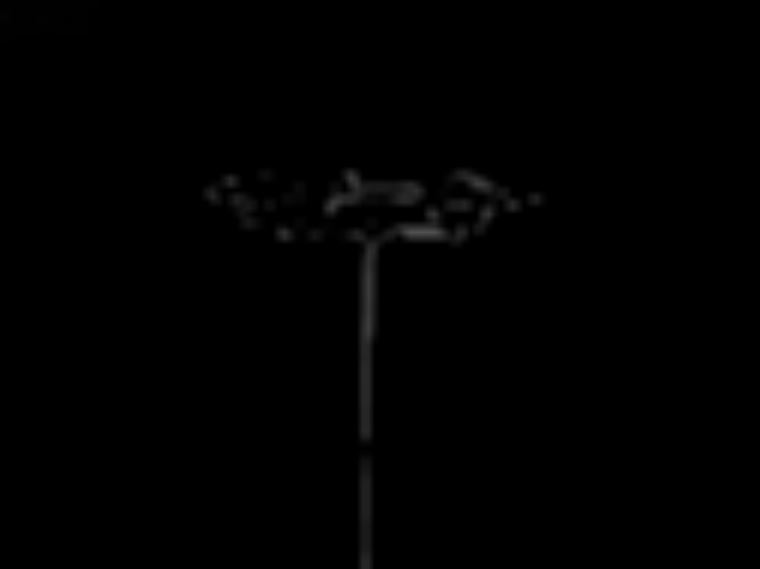
On frame 02:13 UAP 2 appears again on the right side of the floodlight and by frame 02:30 it has left to the right, transiting the cameras entire Field of View (FOV).
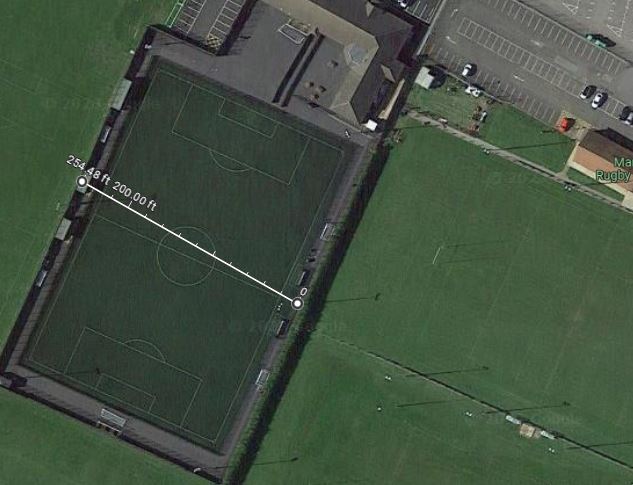
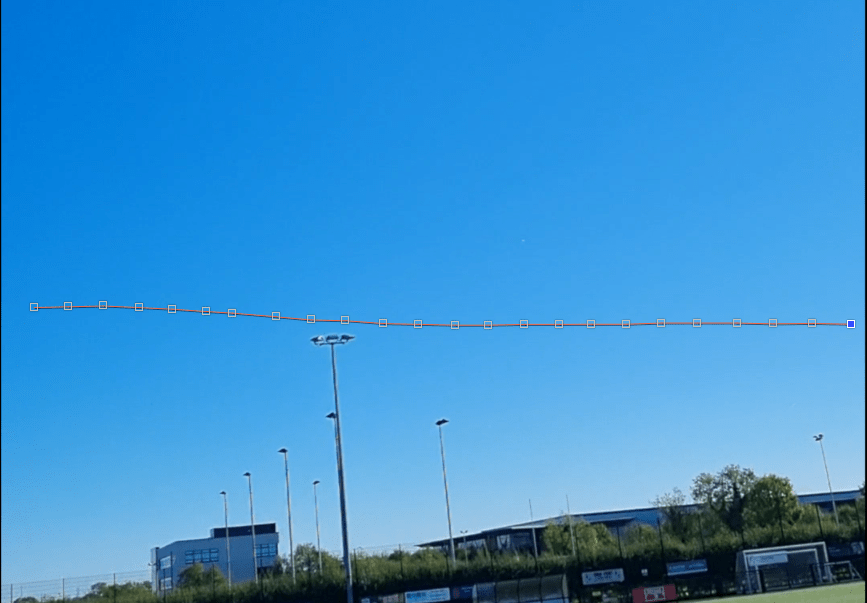
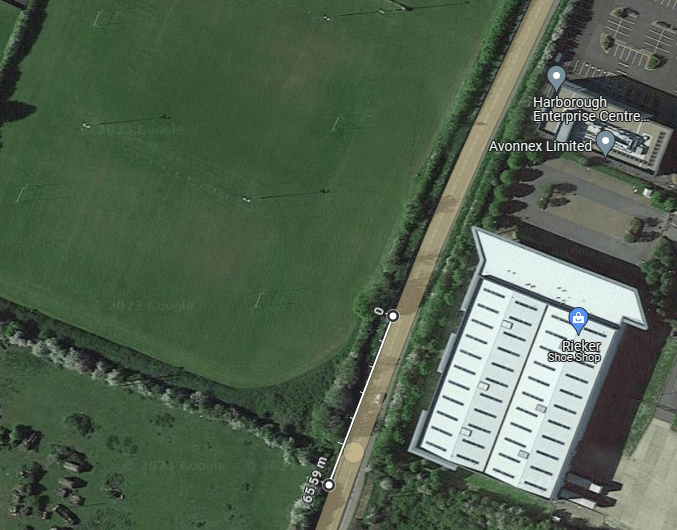
The distance to the floodlight from my filming position is measured out in the Google maps image below, at 254ft, so clearly too distant for the camera to pick up a small flying insect.
I was filming using my Samsung S21+ Rear Wide Camera and their website spec states this is 12MP, with a 26mm focal length and sensor size 1″/1.76″.
I was able to calculate the estimated horizontal field of view for this camera and distance to be 248ft horizontal 436ft vertical.
In 0.4 seconds UAP 2 crosses 248ft which calculates at an estimated speed of 423mph – if the object passed immediately behind the floodlight and was not, as is quite possible, further away, crossing a greater distance in the same time. For example if UAP 2 was further away, overhead the buildings at 1000ft then the speed needed to cross the FOV in 0.4 seconds would be 1704mph or Mach 2.2, which you would by the laws of physics expect to cause a Mach cone on the leading edge and a sonic boom.
The fastest bird in the UK and the world is the Peregrine Falcon, which can, when diving reach 250mph. The object we are observing here is however in straight and level flight and so at these speeds one can rule out ‘known’ species of mammal.
If you search online, at the time of writing the worlds fastest drone is reportedly the Sonic Zoom, clocking an impressive 247mph, still significantly short of our estimated speed and unlikely to be flying around Market Harborough on a Sunday afternoon.
The object could be a military drone, a kind of technology the public are not aware of. This is a real possibility you can’t entirely discount, but again the flying of such an object seems unlikely in the area I was located during filming.
There is some minor camera movement causing parallax which may shave a little bit off that speed estimate but not enough to bring the speed down to that of a bird flying straight or any known commercial drone.
While UAP 2 was making this crossing, UAP 1 was lit up as it passed underneath and unbeknown to me at the time of initial review there was another anomalous object lurking in the distance, with its own propensity for lighting up and also travelling with the apparent speed and characteristics of UAP 2….welcome to UAP 5.
UAP 5
Now UAP 5, was much more difficult to see and even with maximum video cropping there are frames where it is so faint, you can’t see it.
UAP 5 is seen to enter from the right field of view at 01:32, so just before UAP 2 enters from the left FOV travelling in the opposite direction. At the start of observation there is significant camera movement because it is during this second I am positioning the camera to ensure UAP 1 is central. This camera movement causes an illusion of UAP 5 moving to the left but in reality it is at this point relatively slow and moving upwards and to the right of UAP 1. I was able to establish how much UAP 5 movement was down to camera movement by comparing the apparent movement of a fixed object as seen below.
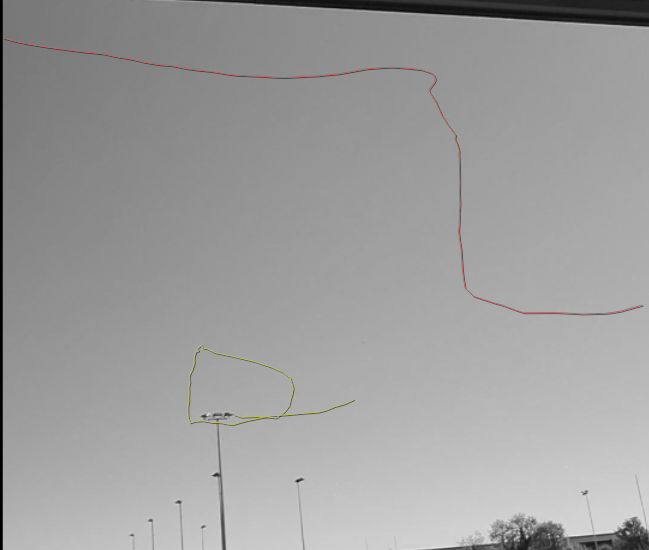
As UAP 5 is moving upwards there are a couple of faint flashes or reflections and then all of a sudden it just takes off to the left, above UAP 1, whilst at the same time UAP 2 is heading in the opposite direction below UAP 1.
Then comes the most jaw dropping moment, because during that initial burst of instantaneous acceleration, one of the five observables, UAP 5 lights up like a flashlight, twice over three frames, or 0.05 seconds.
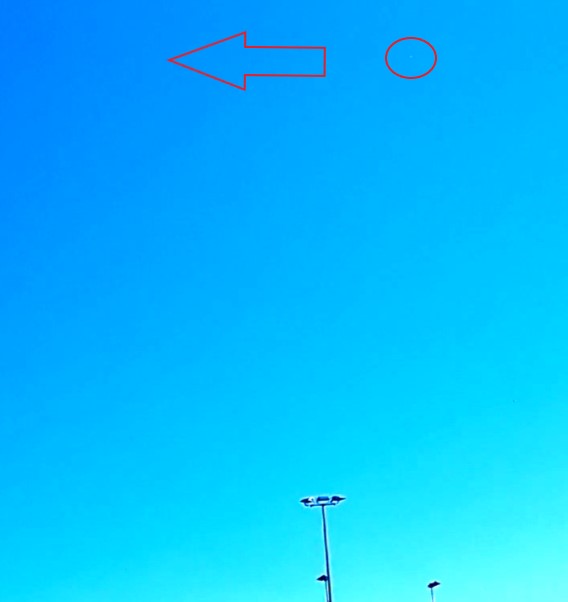
On frame 03:11, UAP 5 exits the field of view to the left, having traversed fully from right to left in under two seconds. Without passing a fixed reference point I can’t calculate a speed for UAP 5, however my viewing perception was that UAP 5 is significantly more distant. It was almost like these objects were completing an orbit of UAP 1, with UAP 2 being my side of UAP 1 and UAP 5 being the other side in the distance. These observations would suggest UAP 5 has similar speed characteristics to UAP 2.
The best demonstration for speed and agility would shortly follow with the entrance of UAP 3 and it’s smaller more distant companion UAP 7.
UAP 3 and 7
Here we have another situation with with a larger clearer object passing one way above UAP 1 and a smaller, fainter, more difficult to see object passing the other way heading towards and beneath UAP 1.
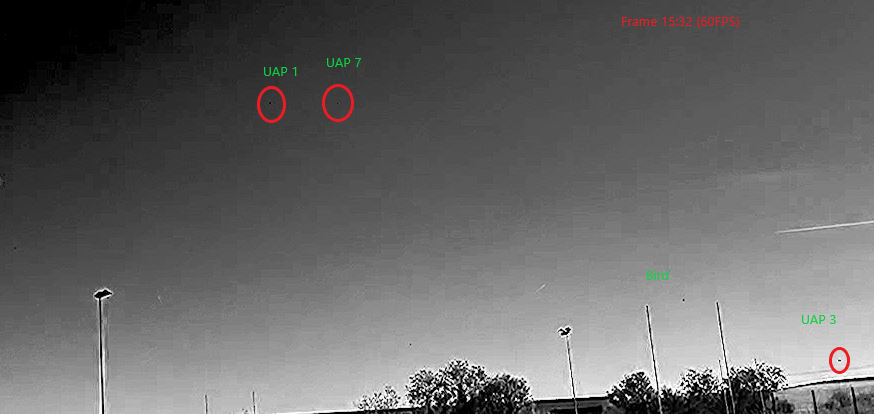
There are two things remarkable about this passage of observation – firstly the speed of UAP 3 and the physics defying movement, then there is the completely unnatural and highly improbable coincidence of both tiny objects converging on the same spot when paused to 1/60th of a second. At this precise moment both objects are completely aligned on the horizontal depth axis with UAP 7 appearing to be completely obscured by UAP 3.
To highlight UAP 3 to friends and family, I created a slowed down version at 1/5th of real-time. There are frames where UAP 3 appears to have protrusions like wings and so many were quick to say it’s just a bird. Those people were left in stunned silence when I produced a real-time version with colour manipulation to enable the viewer to track the object more easily.
I remember back in October 23 telling a friend how frustrated I was at the lack of media interest in the video and his response was “You couldn’t show that to people on the news mate, people would be scared”, so it was clear to me even back then, not everyone thought it was just a bird.
My interest and enthusiasm for UAP is usually ignored by friends and family on social media, but this clip broke that trend and they began, in small numbers at least, to engage, perhaps knowing me well enough that I wouldn’t hoax the video and also realising they were seeing something unnatural.
One extraordinary feature of UAP 3 is the apparent speed, and so I calculated the minimum estimated speed using the same method as I did with UAP 2. On frame 13:58, we see UAP 3 enter the left FOV, then it rapidly crosses the screen in a kind of shallow bowl trajectory.
On frame 14:35, UAP 3 goes out of view on the right side and an assumption is made that it is the same object (UAP 3) re-entering the right FOV on frame 14:46, which would mean that in 11 frames or 0.18 seconds, UAP 3 has completed a 180 degree direction change at speeds potentially above supersonic.
Upon re-entry to the FOV, UAP 3 is now making a descent and on frame 14:43 you observe it very obviously change angle of attack downwards. What natural or manmade flying object can change angle of attack like that in 1/60th of a second?
UAP 3 then descends towards the ground and for the first time you observe these protrusions that almost appear like flapping wings, but now you need to remind yourself this thing is near to or above supersonic. You can also see an actual bird flying between the rugby posts and the the speed contrast is night and day.
As UAP 3 approaches overhead the larger of the trees, it changes direction again to fly back the opposite way, goes behind those trees 976ft away from me and emerges the other side of them appearing to follow the upwards slope of a hilly field, leaving the FOV to the right on frame 15:34.
As the object is at least 976ft from my position (see below), the horizontal FOV at this range is calculated to be 953ft and the vertical is 1678ft. The camera is very steady and having tested for parallax, it is negligible.
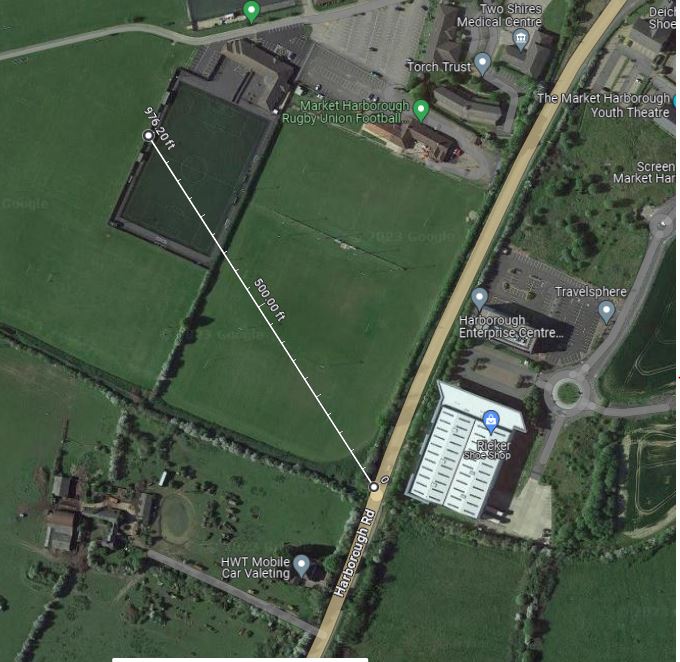
The initial crossing left to right of UAP 3 takes 37 frames at 60FPS which equals 0.62 seconds. If an assumption is made the object was at least overhead or further behind the trees, covering 953ft in 0.62 seconds you have an estimated minimum speed of 1048mph.
This estimate assumes UAP 3 crosses behind the trees, which we can’t say for certain on the initial pass, however we can on the subsequent pass at frame 15:24 when it disappears behind the trees, re-emerging on frame 15:30.
In the midst of a direction change, UAP 3 has neutralised most of its forward momentum by the time it appears overhead the large tree and my perception is that it executes a right base turn to reverse direction 180 degrees.
By using an extremely conservative estimate of 65 metres from the centre of this tree to the edge of the cameras field of view on the right, I can use this distance covered in 19 frames (0.32 seconds) to obtain an average speed estimate of 453mph.
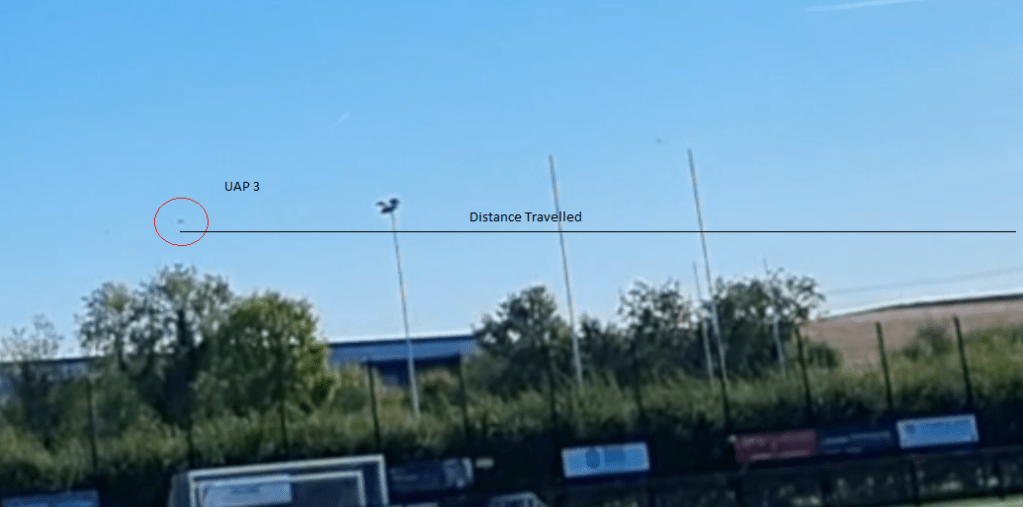
Some question whether the object passes behind the trees and I have proved to the best of my ability using colour manipulation to see that it does pass behind those trees as demonstrated in the short clip below.
If we go back to that moment where UAP 3 is first crossing left to right, another object, UAP 7 was also in the distance, appearing to move much slower, (assessed to be due to further distance from camera). By plotting out the frame by frame course for UAP 7 you can almost visualise an overbanked turn, like a section of rollercoaster track as seen below. Note again how UAP 1 is central to everything else.
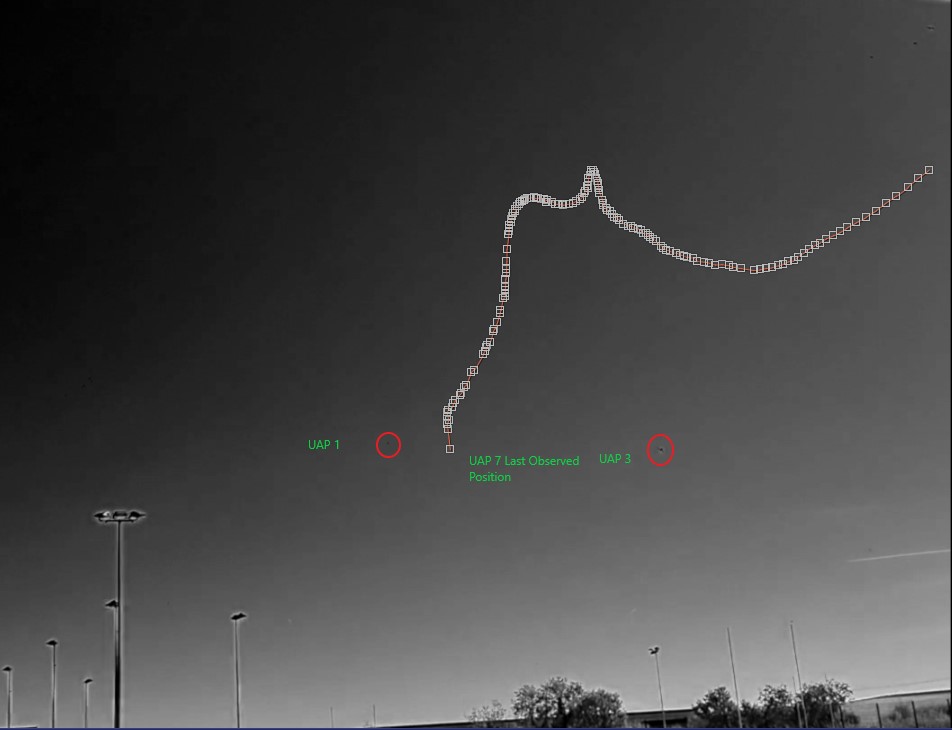
UAP 7 drifts into the right FOV at 11:42 and meanders over towards the centre. On the 12:09 frame, it appears to flash or reflect light. Then comes ‘that’ moment, as I clicked through frame by frame, watching the objects converge I muttered to myself “no it can’t, it just can’t” but it does, they converge on exactly the same spot.
By frame 15:32, UAP 7 is seen clearly for the last time and while horizontally aligned with UAP 1. I lose track of UAP 7 at this point and whilst there are some pop up objects in the vicinity, I cannot say whether they are UAP 7 or whether UAP 7 made itself unobservable.
UAP 4
UAP 4 enters from the left FOV on frame 24:26 with a diagonal heading taking it from an area close to the horizon on the left and out high on the horizon to the right. On frame 24:34 UAP 4 appears to be concealed behind the pole of the floodlight, however it’s projected position was to land just short of the floodlight post and still be visible. In the next frame the object can be seen immediately aft of the post and so there appears to be some artifact from the camera here and ultimately I can’t say whether this object passes in front of or behind the post.
On frame 25:43 UAP 4 leaves the right field of view transiting the full FOV in 1.15 seconds whilst also in a climb. Like UAP 2 if we assume UAP 4 was immediately behind the floodlight then the minimum estimated speed would be 147mph. My perception and opinion is UAP 4 happens to be much further away than UAP 2 and the real speeds for both are likely to be comparably similar.
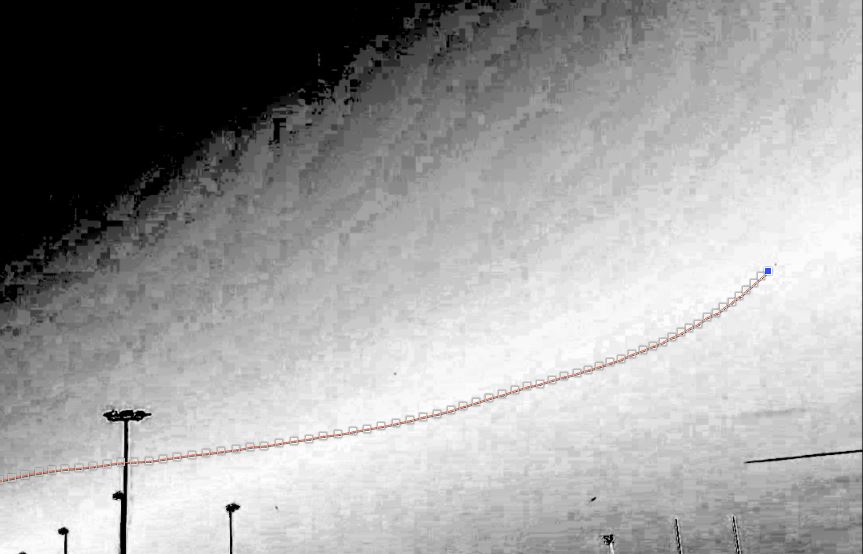
UAP 8
On frame 16:19, UAP 8 appears dropping below the roof of the stand in the top left FOV. On frame 16:32 it appears to flash light as it drops down. By frame 17:57 the object slows above the floodlight and remains in the vicinity. Frame 18:55 is the final frame we see UAP 8 as it appears to vanish on the next one. Coincidently (or perhaps not), we see UAP 1 begin to light up at exactly the same moment, reaching it’s brightest point by frame 19:04.
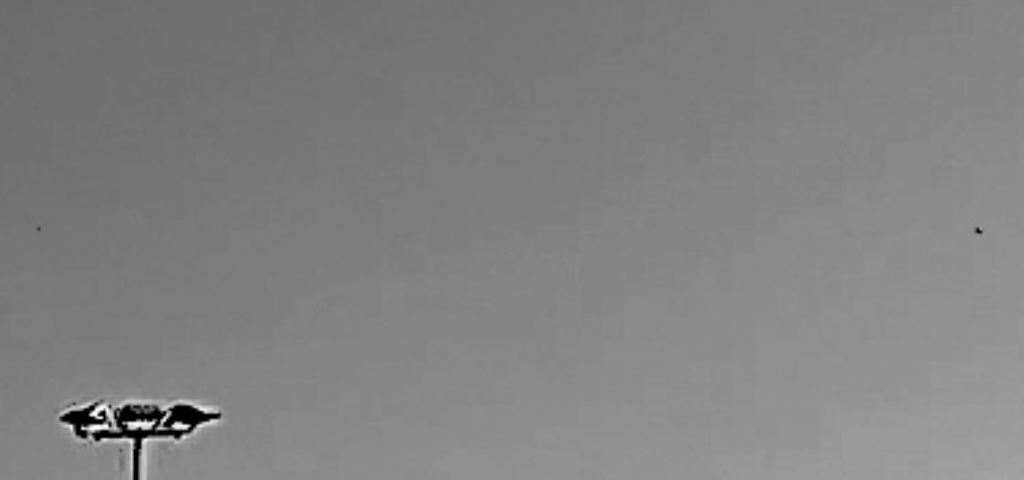
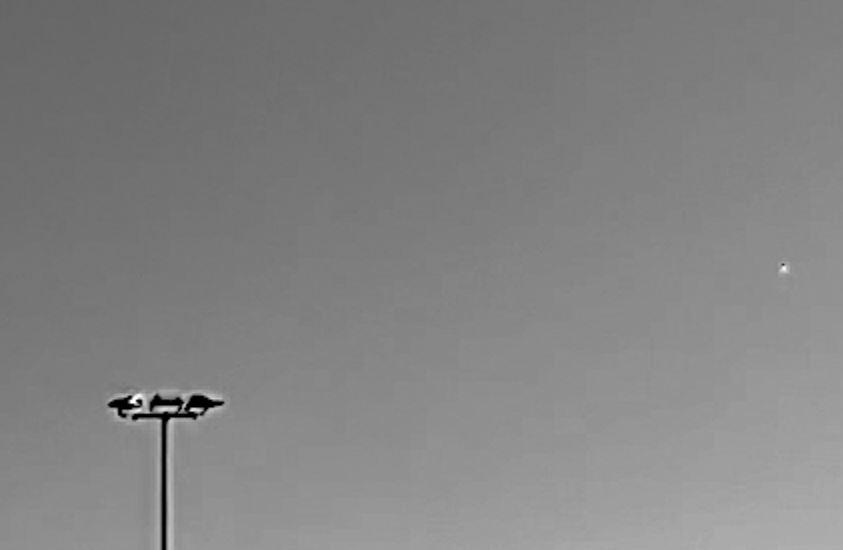
UAP 6
The last object in the 49 seconds of footage where I have high confidence it is one of the same UAP is UAP 6, right at the end of the 49 seconds.
On frame 47:56 UAP 6 appears, drifting in from the left FOV, approximately halfway between the top of the floodlight and the roof of the stand. Upward movement of the camera causes parallax making the object appear to suddenly drop vertically, however the object in reality is travelling diagonally downward to the right as can be seen when the camera movement stabilises. On frame 48:06 there appears to be the slightest of flashes and another curious observation is how between frames this object can appear very clearly and then fade or disappear completely.
UAP 6 appears to be heading on a direct course for UAP 1 and unfortunately the footage ends on frame 49:16 with UAP 6 approximately 18 frames away from reaching UAP 1 had it maintained this heading and speed.
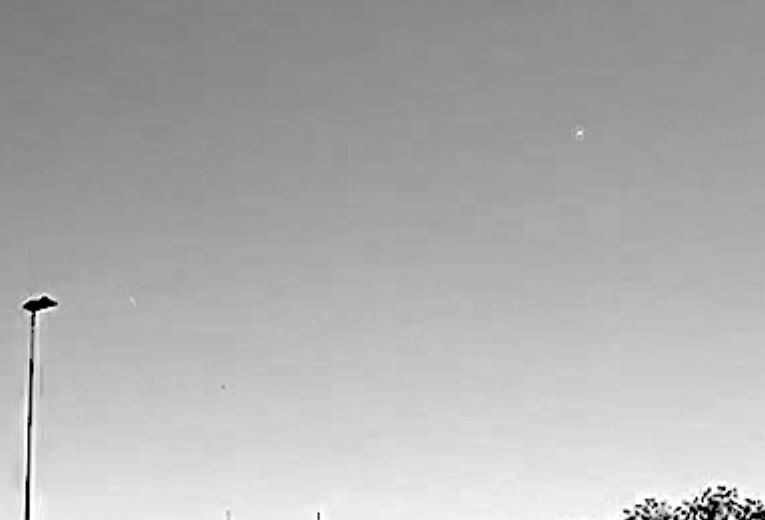
There is another object of similar characteristics, one that I could class as UAP 9 but for it not appearing to quite demonstrate the speed of the others. This is crossing underneath UAP 1, whereas UAP 6 looks like it would have crossed the same direction but slightly above UAP 1. UAP 1 lights up again as both objects approach from the left.
Authors Opinion
Everything you have observed and read, whether in this article or the videos posted to our X account @ontologicalreal has provenance and with my background in law enforcement and intelligence, I consider myself a reliable source.
Any qualified person could take the original 49 second footage and corroborate the factual parts of this article. These tiny little little dots may for some be very unexciting and for those people, they probably didn’t make it this far into the article. This is the nature of UAP, you are never likely going to get a HD video of something looking like the Starship Enterprise with an alien waving out the window at you.
What you will get, and I have no doubt there is a lot of footage out there like this, is videos recorded on phones of fast objects where you need to crop in to even be able to see anything. The evidence then does not come from what the object looks like, but instead what it does. Here I have demonstrated these tiny dots perform actions that are considered anomalous within our current understanding of nature and current aerospace technology.
I am in the same boat as every other person on the planet probably, in not being able to say what the objects actually are. With my understanding of UAP, having followed the subject for years I can only speculate these are the same kind of objects witnessed by civilian and military pilots across the globe.
I am left with many questions like, who operates them? would a pilot even see drone sized objects flying over Mach 1? are they a secret military technology? are they evidence of a non-human technology and presence of non-human intelligence on earth? Are they even solid objects? I sometimes hear rumours of holographic technology but again this is not publicly known to exist at a level where these objects could be projected the way they are.
UAP 1 appeared to be a central figure for the other UAP, almost like it was a command and control unit, yet UAP 1 was fundamentally different to the others as it was slow, possibly just moving downwind with the upper winds and it was flashing more frequently. It was also followed by another UAP further upwind, sharing identical characteristics, but instead flashing green light. Lights are used by humans in the sky for collision avoidance but also communication, for example the red and green light on an aircrafts wings help other pilots know which direction your aircraft is travelling.
I can relate the behaviour and characteristics of UAP 1 to what little descriptions we have for the February 2023 shootdowns of objects over the U.S. and Canada.
For example, the object downed over Alaska by the U.S. was described by an official as being;
‘very different to the (Chinese) balloon, the size of a Volkswagen Beetle, and was flying at 40,000 feet without any obvious system of propulsion or control, officials said.
The next one to be intercepted in Yukon, Canada was described as ‘smaller than the first (Chinese) balloon and cylindrical‘.
The third and final object shot down was described as ‘an octagonal structure with strings hanging from it, but with no evident payload‘. Unlike the previous two this was flying at a much lower altitude of 20’000ft and considered a hazard for aviation.
Gen Glen VanHerck, the head of Norad was quoted as saying: “I’m not going to categorise them as balloons. We’re calling them objects for a reason.”
In a previous article published by Ontological Reality ‘From UAVs to UAPs: Bridging the Gap Between Perception and Reality in UK Airspace’ we evidence how some of these unusual objects are spotted by commercial pilots at high altitudes, then reported to the UK Airprox Board (UKAB), often being categorised as ‘unknown’.
Considering my own observations and some of the accounts out there, I wonder if UAP 1 is a specific type of UAP, one people are more likely to see because it has a slow conventional movement. If you were performing hostile reconnaissance, it seems a great ploy to keep people fixated on a slow flashing object whilst smaller faster objects perform the reconnaissance!
If I were the USAF, I would be looking very closely at the cockpit footage and sensor data for those February 2023 intercepts to see what was going on around the slow object they took down.
Of course they will already have done all of this and one could only speculate whether what they found is the reason they have not released any visual data to the public, yet conversely they are willing to produce crystal clear aircraft video footage when faced with Russian provocations.
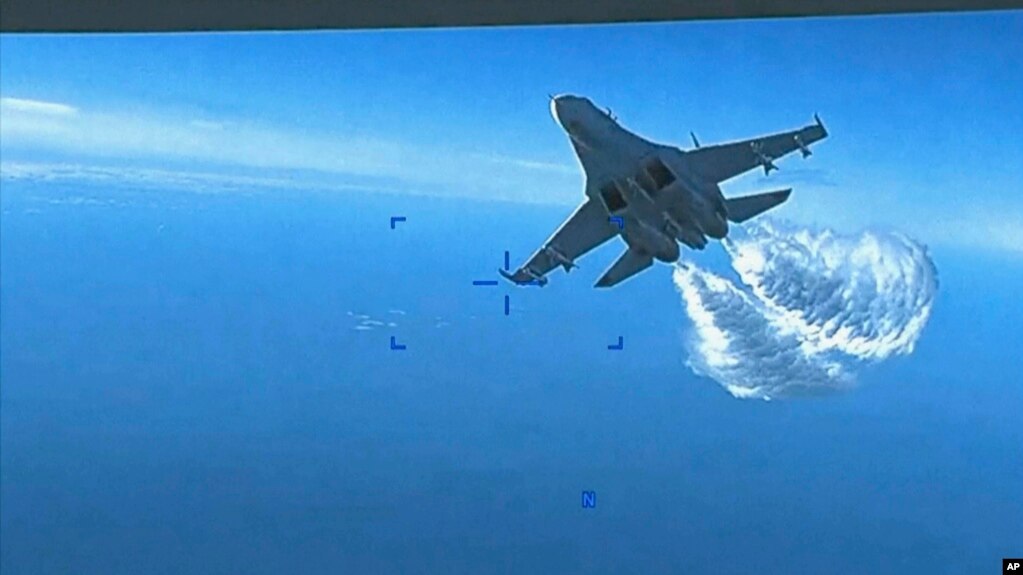
Whatever these objects were, they warrant serious attention and scientific investigation here in the UK. There remains unmitigated collision risks and a huge question mark over National Security threat, for as long as defence and intelligence agencies have no understanding of what the objects are, if they have an operator and if so what their intent is.

 Ontological Reality